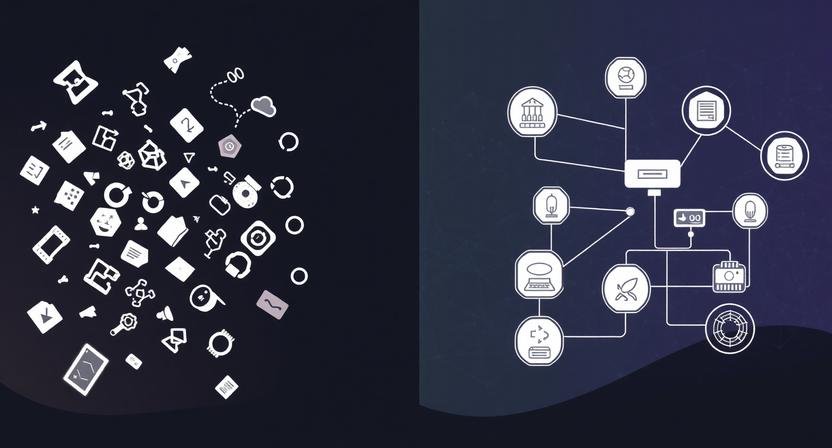
Most AI monetization strategies don’t fail because AI is limited. They fail because people build systems backwards: they start with tools, not demand.
In practice, the market doesn’t pay for “AI usage.” It pays for outcomes with distribution already attached—leads, sales, saved time, or revenue lift.
This post breaks down why most AI income attempts stall and what operators actually do differently when they consistently turn AI into revenue-generating systems.
The Core Problem: AI Is Treated Like a Product, Not a System
Most beginners approach AI monetization like this:
- Pick a tool (ChatGPT, automation tools, agents)
- Build a “service” around it
- Try to sell it broadly
The issue is structural: there is no built-in demand channel.
A solo freelancer might build an “AI content service,” but without:
- a niche audience
- outbound system
- or inbound funnel
…it becomes a portfolio project, not a business.
What actually works instead
Operators reverse the sequence:
Distribution → Offer → Automation → AI layer
Not the other way around.
Why 80% of AI Monetization Attempts Fail
1. No Buyer Context (The Silent Killer)
AI tools don’t define a buyer. Markets do.
If your offer could apply to:
- SaaS founders
- dentists
- coaches
- agencies
…it usually converts poorly everywhere.
Example (real pattern):
A freelancer builds an “AI automation service for businesses.”
Result: no clarity, no urgency, no conversions.
What worked instead:
- “AI lead follow-up system for local service businesses losing inbound calls”
Same AI. Different buyer precision.
2. Tool-First Thinking Instead of Outcome Design
Most failed setups start with:
“What can I do with AI?”
Successful ones start with:
“What problem already costs money daily?”
AI becomes invisible infrastructure.
A 3-person agency doesn’t care about “AI workflows.”
They care about:
- reducing missed leads
- increasing close rates
- reducing manual onboarding time
Explore the core tools used to build and scale AI monetization systems across outreach, automation, and content workflows: AI writing + scripting, workflow automation, lead management systems, content repurposing stacks, outreach personalization engines.
3. No Distribution Layer
This is where most AI monetization strategies collapse completely.
Even a strong offer fails without:
- cold outreach system
- content funnel
- partnerships
- or paid acquisition
A solo founder can build a great AI system in 2 days and still earn $0 for 2 months.
Not because it’s bad—because nobody sees it.
What Actually Works (Field-Tested Patterns)
Pattern 1: AI + High-Intent Service Wrapper
Instead of selling “AI automation,” sell:
- “lead response system for agencies”
- “AI appointment booking recovery for clinics”
- “follow-up automation for missed inquiries”
AI is not the product. It’s the engine.
This aligns directly with systems like:
- internal lead systems discussed in AI Lead Generation Systems That Actually Produce Qualified Clients (/blog/ai-lead-generation-systems-that-actually-produce-qualified-clients)
Pattern 2: AI as a Margin Expander, Not a Business
Most stable AI monetization setups fall into one of these:
- freelancers increasing output 3–5x
- agencies reducing fulfillment cost
- consultants productizing deliverables
Example:
A 5-person agency uses AI to:
- auto-draft proposals
- pre-qualify leads
- generate onboarding docs
Revenue doesn’t come from “AI services.”
It comes from higher throughput per client.
Pattern 3: AI-Backed Outreach + Funnel Stack
The most consistent monetization model:
- Cold outreach (AI-assisted personalization)
- Simple landing page
- Automated follow-up sequence
- Human closing layer
This directly connects with systems like:
- Building an AI Cold Outreach System for Freelancers and Agencies (/blog/building-an-ai-cold-outreach-system-for-freelancers-and-agencies)
- How to Build an AI Content Funnel That Converts Readers Into Leads (/blog/how-to-build-an-ai-content-funnel-that-converts-readers-into-leads)
Without this stack, monetization stays theoretical.
When AI Monetization Fails (Even With Good Execution)
Even strong systems break when:
- the niche has low urgency problems (no immediate pain)
- the buyer is not decision-ready (research stage only)
- the offer requires education before value is obvious
- pricing is detached from ROI
Hard truth:
AI does not fix weak positioning. It amplifies it.
The Operator Framework (What Actually Works in Practice)
If you strip away noise, working AI monetization systems follow this sequence:
Step 1: Identify a repeatable revenue pain
Example:
- missed inbound leads
- slow response times
- low conversion follow-up
Step 2: Attach AI to one bottleneck only
Not the entire business.
Step 3: Wrap it in a specific outcome offer
Not “automation,” but “recovery,” “increase,” or “conversion.”
Step 4: Add a distribution engine
- outbound
- content
- partnerships
Step 5: Productize after traction
Only after 3–5 clients.
Most people do this backwards and wonder why it doesn’t scale.
The Most Common Misunderstanding About AI Money
AI is not a monetization strategy.
It is:
- a leverage layer
- a speed multiplier
- a cost reducer
But money still comes from distribution + offer clarity, not intelligence generation.
If you remove AI tomorrow, most successful operators would still have a business.
If you remove distribution, nothing survives—even with perfect AI systems.
BranchNova Summary
AI monetization fails when it starts with tools instead of buyers. The winning pattern is simple but rarely followed: pick a painful business problem, attach AI to one bottleneck, wrap it in a clear outcome-driven offer, and layer distribution on top. Everything else is noise.
Action Steps
- Pick one business type (local services, agencies, coaches—choose only one)
- Identify a revenue bottleneck (leads, follow-ups, conversion)
- Define a single AI-enhanced outcome offer
- Choose one distribution channel (outbound or content)
- Build only what supports the first 3 clients
Discover More Insights
About the Founder
Learn more about our founder, Esa Wroth, and his mission to make AI practical, human-centered, and accessible for entrepreneurs, creators, and professionals.