Most entrepreneurs use generative AI daily—and still misunderstand what it’s actually doing.
That misunderstanding is the root cause of:
- Fragile automations
- Over-trusting outputs
- “Why did the AI mess this up?” moments
- Teams blaming the tool instead of the setup
This guide explains how generative AI works in plain language, without math, code, or hype—so you can use it more accurately, safely, and profitably.
If you only remember one thing: generative AI doesn’t know things—it predicts them. Everything else flows from that.
What Generative AI Actually Is (No Jargon)
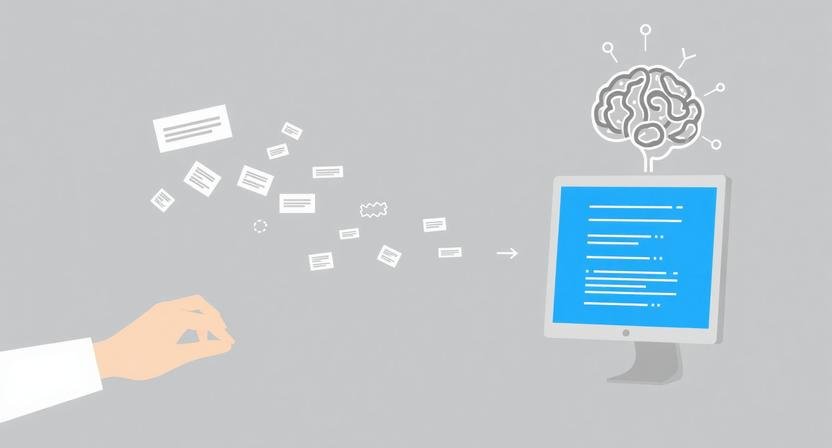
Generative AI is software trained to predict what comes next.
That’s it.
When you ask ChatGPT a question, it’s not:
- Searching a database
- Looking up facts
- Reasoning like a human
It’s calculating:
“Based on everything I’ve seen, what is the most likely next word, then the next, then the next?”
Those words form sentences.
Sentences form explanations.
Explanations feel like understanding—but they’re still probability chains.
This is why AI can sound confident and still be wrong.
The Training Phase (Why AI Knows “So Much”)
Before you ever type a prompt, generative AI goes through training.
In simple terms:
- It reads massive amounts of text, images, or data
- Learns patterns between words, concepts, and structures
- Builds a statistical map of “what usually follows what”
It does not store:
- Verified facts
- Source citations
- Ground truth
It stores patterns, not knowledge.
Why this matters in business
If your workflow assumes AI is a fact engine, it will fail silently.
If your workflow assumes AI is a pattern engine, it becomes extremely powerful.
Tokens, Not Words (The Hidden Constraint Most People Miss)
AI doesn’t see words the way you do.
It sees tokens—chunks of text.
Sometimes:
- One word = one token
- Sometimes half a word = one token
- Sometimes multiple words = one token
Why you should care:
- Every conversation has a context window (a limit)
- Long prompts, long chats, or messy instructions push out earlier context
- When context drops, accuracy drops
Common founder mistake
Keeping one long “master chat” for everything.
Result:
The AI forgets key constraints, tone rules, or business logic—and starts improvising.
Inference: What Happens When You Hit “Enter”
Once trained, AI doesn’t “learn” in real time (unless explicitly designed to).
When you submit a prompt, it:
- Breaks your input into tokens
- Looks at surrounding context
- Predicts the most likely next token
- Repeats until it reaches a stopping point
This is called inference.
Important tradeoff
- More creativity = more variance
- More precision = tighter constraints
If you don’t specify constraints, the model fills gaps creatively—even when accuracy matters.
Why AI Hallucinates (And Why That’s the Wrong Word)
“Hallucination” makes it sound broken.
It’s not.
AI fills gaps by design.
If the model:
- Lacks context
- Faces ambiguity
- Is forced to answer anyway
…it will generate something that sounds plausible.
What most tutorials don’t say
Hallucinations are usually caused by prompt design failures, not model failures.
If you don’t define:
- Allowed assumptions
- Data boundaries
- What to do when unsure
The AI will guess—confidently.
A Real-World Example: Content Ops Team (3–5 People)
Scenario:
A small content team uses AI to draft articles.
What goes wrong:
- Prompts are vague (“Write an SEO blog about X”)
- No audience, intent, or constraints specified
- Editors complain about “generic AI content”
What’s actually happening:
The AI is doing exactly what it’s trained to do:
produce the most statistically common version of that request.
Fix:
Change the inputs, not the tool.
Add:
- Target reader (role + sophistication)
- What to avoid
- What success looks like
- What not to assume
Same model. Radically different output.
When Generative AI Works Best (And When It Breaks)
Works well when:
- Patterns are repeatable
- Structure matters more than novelty
- You can review or validate outputs
- Speed beats perfection
Breaks when:
- Truth must be exact
- Context is incomplete
- Instructions are implied, not stated
- No human verification exists
This is why AI is incredible for:
- Drafting
- Summarization
- Ideation
- First-pass analysis
…and risky for:
- Final legal conclusions
- Financial decisions without checks
- Medical or compliance advice
If You Do Nothing Else, Do This
Treat generative AI like a junior operator with no memory and no judgment.
You must:
- Give it context
- Define constraints
- Specify failure behavior (“If unsure, say so”)
- Review outputs before execution
Do that, and AI becomes leverage—not liability.
Want to Go Further?
If this clicked, the next step isn’t using more AI—it’s choosing the right tools for the right jobs.
👉 Explore BranchNova’s Top 10 Tools for AI Productivity
(Selected for reliability, workflow fit, and real operator use—not hype or novelty)
How This Connects to Productivity & Automation
Understanding how generative AI works changes how you:
- Design prompts
- Build automations
- Assign tasks between humans and AI
- Prevent silent workflow failures
This foundation is what makes advanced workflows reliable—especially as teams scale.
If you skip this understanding, every automation you build is more fragile than it looks.
BranchNova Summary
Generative AI doesn’t think, reason, or know—it predicts.
That single fact explains:
- Its power
- Its limits
- Most implementation failures
Entrepreneurs who understand this build systems that scale.
Those who don’t end up babysitting “smart” tools.
Discover More Insights
About the Founder
Learn more about our founder, Esa Wroth, and his mission to make AI practical, human-centered, and accessible for entrepreneurs, creators, and professionals.