
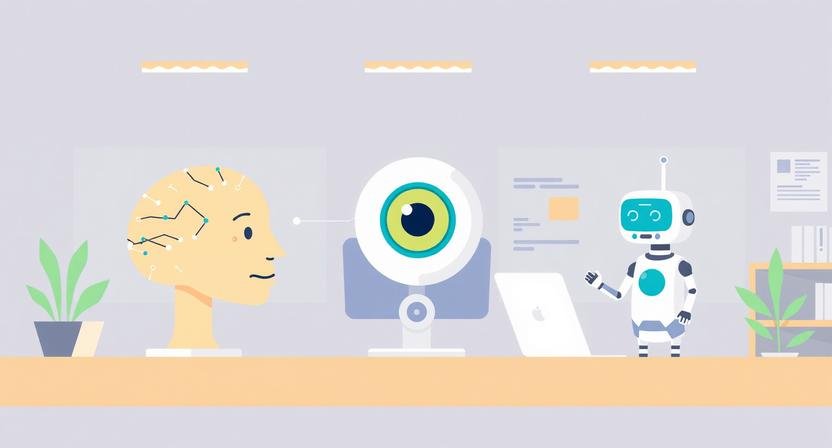
Understanding LLMs, vision models, and AI agents is no longer optional for founders scaling a business in 2026—but you don’t need to build these systems yourself to use them well.
Most entrepreneurs hear terms like LLMs, vision models, and AI agents used interchangeably. They aren’t. Treating them as the same thing leads to wasted spend, fragile automations, and expectations that collapse under real operational pressure.
This guide explains what each actually does, where it works in real businesses, and—just as important—where it breaks when implemented without clear boundaries.
If you remember only one thing: these are tools with different jobs, not magic brains.
Independent research from the Stanford Institute for Human‑Centered AI’s AI Index shows how real‑world AI systems are tracked and evaluated across benchmarks, adoption, and practical capabilities — not just hype or buzzwords. See the full 2025 AI Index Report for free insights into how language models, vision systems, and agent‑like frameworks are progressing and being adopted globally.
Want to see how these models show up in real tools founders actually use?
Explore our Top 10 Tools for AI Productivity—each mapped to LLMs, vision models, or AI agents, with real use cases and tradeoffs.
The Three AI “Workers” Every Business Encounters
Think of modern AI systems as three different specialists:
Swipe left to view the full table.
| AI Type | Best At | Common Business Use |
|---|---|---|
| LLMs | Language & reasoning | Writing, analysis, chat, planning |
| Vision Models | Seeing & interpreting images/video | Brand assets, inspections, moderation |
| AI Agents | Executing multi-step tasks | Automation, ops workflows, monitoring |
Understanding who does what is the difference between scaling smoothly and fighting constant AI failures.
Large Language Models (LLMs): The Thinking + Writing Engine
LLMs (Large Language Models) are the backbone of tools like ChatGPT, Claude, and enterprise copilots.
What they do well
- Draft and edit text (emails, docs, scripts)
- Analyze written data (reviews, reports, transcripts)
- Reason through problems when scoped correctly
Real business example
A 5-person SaaS team uses an LLM to:
- Draft customer support replies
- Summarize weekly product feedback
- Generate first-pass sales outreach
This replaces hours of low-leverage writing, not strategic decision-making.
What most tutorials don’t tell you
- LLMs don’t “know” things—they predict text
- They hallucinate when prompts are vague
- They degrade fast when overloaded with context
Where this breaks
- Asking it to be a CRM, analytics tool, and strategist at once
- Feeding it messy data without structure
- Expecting consistent outputs without prompt constraints
If you do nothing else:
Use LLMs for drafting and synthesis, not final authority or automation logic.
Vision Models: AI That Actually “Sees”
Vision models analyze images and video—logos, screenshots, photos, scans.
What they do well
- Detect objects, faces, layouts, text (OCR)
- Classify images at scale
- Enforce visual brand or content standards
Concrete use case
An ecommerce brand uses vision models to:
- Auto-review UGC photos for brand fit
- Flag low-quality product images
- Extract text from invoices and receipts
Tradeoff founders underestimate
Vision models are context-poor. They see pixels, not intent.
They can tell what is in an image, but not why it matters unless you layer logic on top.
Where this breaks
- Edge cases (lighting, angles, new styles)
- Subjective judgments (aesthetic quality, “vibe”)
- Small datasets with high variance
If you do nothing else:
Use vision models for filtering and classification, not creative judgment.
AI Agents: The Automation Layer (and the Most Misused)
AI agents combine models + rules + tools to execute tasks autonomously.
Think less “robot employee,” more workflow orchestrator.
What they actually do
- Observe inputs (email, CRM, dashboards)
- Decide next steps based on rules + AI output
- Take actions (send messages, update tools, trigger workflows)
Realistic scenario
A consulting agency deploys an agent that:
- Monitors inbound leads
- Scores them using an LLM
- Routes qualified leads to sales
- Schedules follow-ups automatically
No single model does this—the agent coordinates everything.
What most people get wrong
- Giving agents too much freedom too early
- Skipping guardrails and human checkpoints
- Assuming agents “understand” business nuance
Where this breaks
- Poorly defined processes
- Unstable tool integrations
- Lack of audit logs and overrides
If you do nothing else:
Start with narrow, repeatable workflows, not open-ended agents.
How These Models Work Together (In Practice)
In real businesses, these systems stack:
- LLM → Thinks, writes, reasons
- Vision model → Interprets visual input
- Agent → Decides and acts across tools
Example:
A content team uses:
- Vision models to review images
- LLMs to generate captions and briefs
- Agents to schedule, publish, and report
The power isn’t any one model—it’s orchestration.
Choosing the Right One (A Simple Decision Framework)
Ask this before adopting any AI tool:
- Is the core task language-based? → LLM
- Is the input visual? → Vision model
- Does it require multi-step execution? → Agent
If a tool claims to do all three flawlessly, be skeptical. Most failures come from overpromising stacks.
What This Means for Founders Scaling with AI
Early-stage teams should:
- Master LLMs first
- Add vision only when visuals are a bottleneck
- Introduce agents after workflows are stable
This sequencing reduces risk, cost, and cognitive load.
If you want the broader strategic context, revisit Scaling Your Startup with AI: Where to Start. If you’re evaluating platforms, The Beginner’s Guide to Choosing AI Tools will save you from vendor-driven decisions.
BranchNova Summary
LLMs think in language.
Vision models see pixels.
AI agents execute workflows.
Most AI problems in business aren’t technical—they’re misalignment problems. When you match the right model to the right job, AI becomes leverage instead of liability.
Discover More Insights
About the Founder
Learn more about our founder, Esa Wroth, and his mission to make AI practical, human-centered, and accessible for entrepreneurs, creators, and professionals.