In 2026, most entrepreneurs and small teams don’t struggle with access to AI tools — they struggle with sequencing them into a workflow that actually saves time.
This AI workflow tutorial shows entrepreneurs and small teams how to build a structured workflow from scratch, automate repetitive tasks, and scale efficiently using real-world AI tools. Many entrepreneurs and small teams dive into AI expecting instant results, only to hit friction because they lack a structured workflow. Without a clear sequence, you risk juggling multiple apps, duplicating work, or wasting hours weekly.
This tutorial guides a realistic, step-by-step workflow suitable for a 3–10 person service agency or early-stage startup, including tool choices, sequencing, and pitfalls to avoid.
Step 1: Map Your Repetitive Tasks
Scenario: A 5-person digital marketing agency wants to reduce weekly content brief creation time.
Action Steps:
- List all recurring tasks in a typical week (social posts, blog research, client reports).
- Categorize tasks into automatable vs. human judgment:
- Automatable: draft captions, summarize research, generate email sequences.
- Requires human input: final edits, client-specific insights, tone adjustment.
Pro Tip: Most teams overestimate AI’s capabilities. Start small and expand.
Step 2: Choose the Right AI Tools
Core tool stack for small teams:
- Content generation: GPT-5 Mini via API → produces fast drafts tuned for tone.
- Image/video creation: DALL·E or Runway → automates visuals without freelancers.
- Data aggregation & summarization: Zapier + OpenAI → collects and condenses reports automatically.
- Task reminders & workflow automation: Notion + Make (Integromat) → centralizes triggers and outputs.
Tradeoff: Overloading with tools backfires. Stick to 3–5 core apps initially.
Step 3: Design Your Workflow Sequence
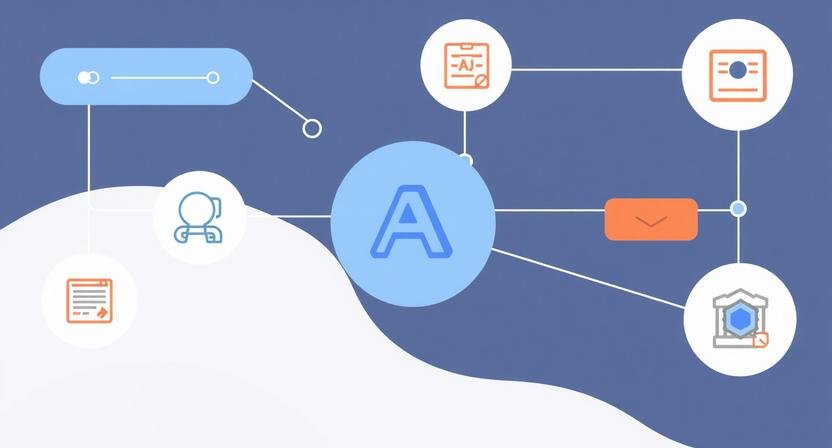
Example Workflow: Weekly Content Briefs
- Collect Sources: Zapier gathers articles, trending posts, and client input.
- Summarize Content: GPT generates concise summaries for each source.
- Draft Outline: GPT produces outlines for social posts, blogs, or emails.
- Generate Visuals: DALL·E creates images corresponding to the outline.
- Compile Brief: Notion aggregates all outputs into a single shareable document.
To turn your workflow summaries into clear, interactive presentations for your team or clients, platforms like Gamma make it easy to communicate insights without losing nuance or context.
Common Mistake: Skipping the summarization step results in low-quality drafts.
To connect multiple tools without writing a single line of code, many small teams rely on automation platforms like Zapier.
Step 4: Test, Iterate, and Automate
Implementation Tips:
- Run the workflow manually for one week.
- Track time saved and errors encountered.
- Example: Your 5-person team can reduce content brief prep from 5 hours to 12 minutes.
- Adjust prompts, data sources, and tool settings based on outcomes.
Lesson Learned: Automation only works when aligned with real human tasks. Avoid automating for its own sake.
Boost Your AI Workflow Efficiency
Ready to put these AI workflow strategies into practice? Grab our free guide with the top 10 AI tools that entrepreneurs use to cut hours of repetitive work every week.
Step 5: Scale the Workflow
- Replicate the workflow for other departments (sales outreach, reporting, proposals).
- Document SOPs for new hires to follow the workflow without training friction.
- Monitor AI output: update prompts and integrations as tools evolve.
Tradeoff: Scaling too quickly without SOPs leads to inconsistent outputs and client confusion.
BranchNova Summary
Building an AI workflow isn’t about using the latest tools—it’s about sequencing the right tasks, testing realistically, and scaling thoughtfully.
Key takeaways for small teams:
- Start with repetitive tasks to free human creativity.
- Limit your tool stack to what truly fits your team’s needs.
- Sequence tasks: collect → summarize → draft → visualize → compile.
- Test before scaling; measure time saved and error reduction.
- Document workflows for repeatability and smooth onboarding.
This approach ensures efficiency, consistency, and minimal friction for teams under 10 people.
Discover More Insights
About the Founder
Learn more about our founder, Esa Wroth, and his mission to make AI practical, human-centered, and accessible for entrepreneurs, creators, and professionals.